为代码添加跟踪注释
如果您决定不再跟踪您的运行,请移除 LANGSMITH_TRACING 环境变量。
请注意,这不会影响 RunTree 对象或API用户,因为这些是底层功能,不受跟踪开关的影响。
有多种方法可以将追踪记录发送到 LangSmith。
如果您正在使用 LangChain(无论是 Python 还是 JS/TS),您可以跳过本节,直接前往 特定于 LangChain 的说明。
使用 @traceable / traceable
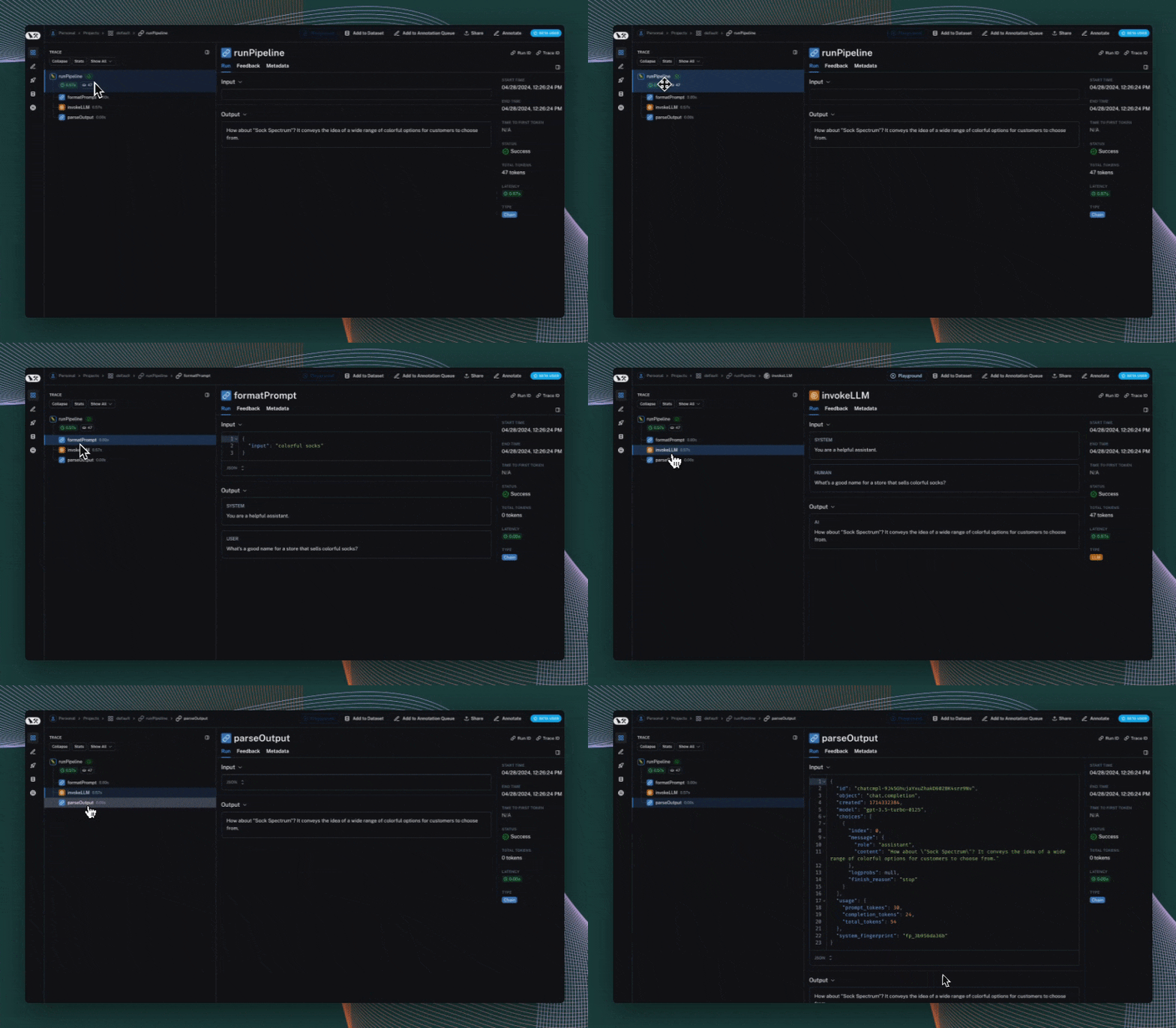
LangSmith 通过 Python 中的 @traceable 装饰器和 TypeScript 中的 traceable 函数,只需对现有代码进行极少的修改即可轻松记录跟踪信息。
- Python
- TypeScript
@traceable 装饰器是使用 LangSmith Python SDK 记录跟踪的简单方法。只需用 @traceable 装饰任何函数。
from langsmith import traceable
from openai import Client

openai = Client()

@traceable
def format_prompt(subject):
  return [
      {
          "role": "system",
          "content": "You are a helpful assistant.",
      },
      {
          "role": "user",
          "content": f"What's a good name for a store that sells {subject}?"
      }
  ]

@traceable(run_type="llm")
def invoke_llm(messages):
  return openai.chat.completions.create(
      messages=messages, model="gpt-4o-mini", temperature=0
  )

@traceable
def parse_output(response):
  return response.choices[0].message.content

@traceable
def run_pipeline():
  messages = format_prompt("colorful socks")
  response = invoke_llm(messages)
  return parse_output(response)

run_pipeline()
traceable 函数是使用 LangSmith TypeScript SDK 记录跟踪的简单方法。只需用 traceable 包裹任何函数。
请注意,当使用 traceable 包装同步函数时(例如下面示例中的 formatPrompt),在调用它时应使用 await 关键字以确保跟踪记录正确。
import { traceable } from "langsmith/traceable";
import OpenAI from "openai";

const openai = new OpenAI();

const formatPrompt = traceable(
(subject: string) => {
  return [
    {
      role: "system" as const,
      content: "You are a helpful assistant.",
    },
    {
      role: "user" as const,
      content: `What's a good name for a store that sells ${subject}?`,
  },
];
},
{ name: "formatPrompt" }
);

const invokeLLM = traceable(
  async ({ messages }: { messages: { role: string; content: string }[] }) => {
      return openai.chat.completions.create({
          model: "gpt-4o-mini",
          messages: messages,
          temperature: 0,
      });
  },
  { run_type: "llm", name: "invokeLLM" }
);

const parseOutput = traceable(
  (response: any) => {
      return response.choices[0].message.content;
  },
  { name: "parseOutput" }
);

const runPipeline = traceable(
  async () => {
      const messages = await formatPrompt("colorful socks");
      const response = await invokeLLM({ messages });
      return parseOutput(response);
  },
  { name: "runPipeline" }
);

await runPipeline();
使用 trace 上下文管理器(仅限 Python)
在 Python 中,您可以使用 trace 上下文管理器将跟踪记录到 LangSmith。这在以下情况下非常有用:
- 你想为特定代码块记录追踪信息。
- 您希望对跟踪的输入、输出和其他属性进行控制。
- 使用装饰器或包装器是不可行的。
- 以上任何或全部。
上下文管理器与 traceable 装饰器和 wrap_openai 包装器无缝集成,因此您可以在同一应用程序中一起使用它们。
import openai
import langsmith as ls
from langsmith.wrappers import wrap_openai

client = wrap_openai(openai.Client())

@ls.traceable(run_type="tool", name="Retrieve Context")
def my_tool(question: str) -> str:
    return "During this morning's meeting, we solved all world conflict."

def chat_pipeline(question: str):
    context = my_tool(question)
    messages = [
        { "role": "system", "content": "You are a helpful assistant. Please respond to the user's request only based on the given context." },
        { "role": "user", "content": f"Question: {question}\nContext: {context}"}
    ]
    chat_completion = client.chat.completions.create(
        model="gpt-4o-mini", messages=messages
    )
    return chat_completion.choices[0].message.content

app_inputs = {"input": "Can you summarize this morning's meetings?"}

with ls.trace("Chat Pipeline", "chain", project_name="my_test", inputs=app_inputs) as rt:
    output = chat_pipeline("Can you summarize this morning's meetings?")
    rt.end(outputs={"output": output})
封装 OpenAI 客户端
Python/TypeScript 中的 wrap_openai/wrapOpenAI 方法允许您包装您的 OpenAI 客户端,以便自动记录跟踪信息——无需装饰器或函数包装!
该包装器与 @traceable 装饰器或 traceable 函数无缝配合,您可以在同一应用程序中同时使用它们。
工具调用自动呈现
- Python
- TypeScript
import openai
from langsmith import traceable
from langsmith.wrappers import wrap_openai

client = wrap_openai(openai.Client())

@traceable(run_type="tool", name="Retrieve Context")
def my_tool(question: str) -> str:
  return "During this morning's meeting, we solved all world conflict."

@traceable(name="Chat Pipeline")
def chat_pipeline(question: str):
  context = my_tool(question)
  messages = [
      { "role": "system", "content": "You are a helpful assistant. Please respond to the user's request only based on the given context." },
      { "role": "user", "content": f"Question: {question}\nContext: {context}"}
  ]
  chat_completion = client.chat.completions.create(
      model="gpt-4o-mini", messages=messages
  )
  return chat_completion.choices[0].message.content

chat_pipeline("Can you summarize this morning's meetings?")
import OpenAI from "openai";
import { traceable } from "langsmith/traceable";
import { wrapOpenAI } from "langsmith/wrappers";

const client = wrapOpenAI(new OpenAI());

const myTool = traceable(async (question: string) => {
  return "During this morning's meeting, we solved all world conflict.";
}, { name: "Retrieve Context", run_type: "tool" });

const chatPipeline = traceable(async (question: string) => {
  const context = await myTool(question);
  const messages = [
      {
          role: "system",
          content:
              "You are a helpful assistant. Please respond to the user's request only based on the given context.",
      },
      { role: "user", content: `Question: ${question} Context: ${context}` },
  ];
  const chatCompletion = await client.chat.completions.create({
      model: "gpt-4o-mini",
      messages: messages,
  });
  return chatCompletion.choices[0].message.content;
}, { name: "Chat Pipeline" });

await chatPipeline("Can you summarize this morning's meetings?");
使用 RunTree API
另一种更明确地将跟踪记录到 LangSmith 的方式是通过 RunTree API。此 API 允许您对跟踪有更多控制权 - 您可以手动创建运行和子运行来构建您的跟踪。您仍然需要设置您的 LANGSMITH_API_KEY,但此方法不需要 LANGSMITH_TRACING。
这种方法不推荐使用,因为传播跟踪上下文时更容易出错。
- Python
- TypeScript
import openai
from langsmith.run_trees import RunTree
# This can be a user input to your app
question = "Can you summarize this morning's meetings?"
# Create a top-level run
pipeline = RunTree(
  name="Chat Pipeline",
  run_type="chain",
  inputs={"question": question}
)
pipeline.post()
# This can be retrieved in a retrieval step
context = "During this morning's meeting, we solved all world conflict."
messages = [
  { "role": "system", "content": "You are a helpful assistant. Please respond to the user's request only based on the given context." },
  { "role": "user", "content": f"Question: {question}\nContext: {context}"}
]
# Create a child run
child_llm_run = pipeline.create_child(
  name="OpenAI Call",
  run_type="llm",
  inputs={"messages": messages},
)
child_llm_run.post()
# Generate a completion
client = openai.Client()
chat_completion = client.chat.completions.create(
  model="gpt-4o-mini", messages=messages
)
# End the runs and log them
child_llm_run.end(outputs=chat_completion)
child_llm_run.patch()
pipeline.end(outputs={"answer": chat_completion.choices[0].message.content})
pipeline.patch()
import OpenAI from "openai";
import { RunTree } from "langsmith";
// This can be a user input to your app
const question = "Can you summarize this morning's meetings?";
const pipeline = new RunTree({
  name: "Chat Pipeline",
  run_type: "chain",
  inputs: { question }
});
await pipeline.postRun();

// This can be retrieved in a retrieval step
const context = "During this morning's meeting, we solved all world conflict.";
const messages = [
  { role: "system", content: "You are a helpful assistant. Please respond to the user's request only based on the given context." },
  { role: "user", content: `Question: ${question}
Context: ${context}` }
];
// Create a child run
const childRun = await pipeline.createChild({
  name: "OpenAI Call",
  run_type: "llm",
  inputs: { messages },
});
await childRun.postRun();
// Generate a completion
const client = new OpenAI();
const chatCompletion = await client.chat.completions.create({
  model: "gpt-4o-mini",
  messages: messages,
});
// End the runs and log them
childRun.end(chatCompletion);
await childRun.patchRun();
pipeline.end({ outputs: { answer: chatCompletion.choices[0].message.content } });
await pipeline.patchRun();
使用示例
你可以将上述工具扩展,方便地追踪任何代码。以下是一些示例扩展:
在类中跟踪任何公共方法:
from typing import Any, Callable, Type, TypeVar

T = TypeVar("T")


def traceable_cls(cls: Type[T]) -> Type[T]:
    """Instrument all public methods in a class."""

    def wrap_method(name: str, method: Any) -> Any:
        if callable(method) and not name.startswith("__"):
            return traceable(name=f"{cls.__name__}.{name}")(method)
        return method

    # Handle __dict__ case
    for name in dir(cls):
        if not name.startswith("_"):
            try:
                method = getattr(cls, name)
                setattr(cls, name, wrap_method(name, method))
            except AttributeError:
                # Skip attributes that can't be set (e.g., some descriptors)
                pass

    # Handle __slots__ case
    if hasattr(cls, "__slots__"):
        for slot in cls.__slots__:  # type: ignore[attr-defined]
            if not slot.startswith("__"):
                try:
                    method = getattr(cls, slot)
                    setattr(cls, slot, wrap_method(slot, method))
                except AttributeError:
                    # Skip slots that don't have a value yet
                    pass

    return cls


@traceable_cls
class MyClass:
    def __init__(self, some_val: int):
        self.some_val = some_val

    def combine(self, other_val: int):
        return self.some_val + other_val

# See trace: https://smith.langchain.com/public/882f9ecf-5057-426a-ae98-0edf84fdcaf9/r
MyClass(13).combine(29)
确保在退出前提交所有痕迹
LangSmith 的追踪是在后台线程中完成的,以避免阻碍您的生产应用程序。这意味着您的进程可能会在所有追踪成功发送到 LangSmith 之前结束。以下是确保在退出应用程序之前提交所有追踪的一些选项。
使用 LangSmith SDK
如果您单独使用 LangSmith SDK,可以在退出前使用 flush 方法:
- Python
- TypeScript
from langsmith import Client

client = Client()

@traceable(client=client)
async def my_traced_func():
  # Your code here...
  pass

try:
  await my_traced_func()
finally:
  await client.flush()
import { Client } from "langsmith";

const langsmithClient = new Client({});

const myTracedFunc = traceable(
async () => {
// Your code here...
},
{ client: langsmithClient }
);

try {
await myTracedFunc();
} finally {
await langsmithClient.flush();
}
使用LangChain
如果您正在使用 LangChain,请参阅我们的 LangChain 跟踪指南。
如果您更喜欢视频教程,请查看 LangSmith 课程入门中的 追踪基础视频。